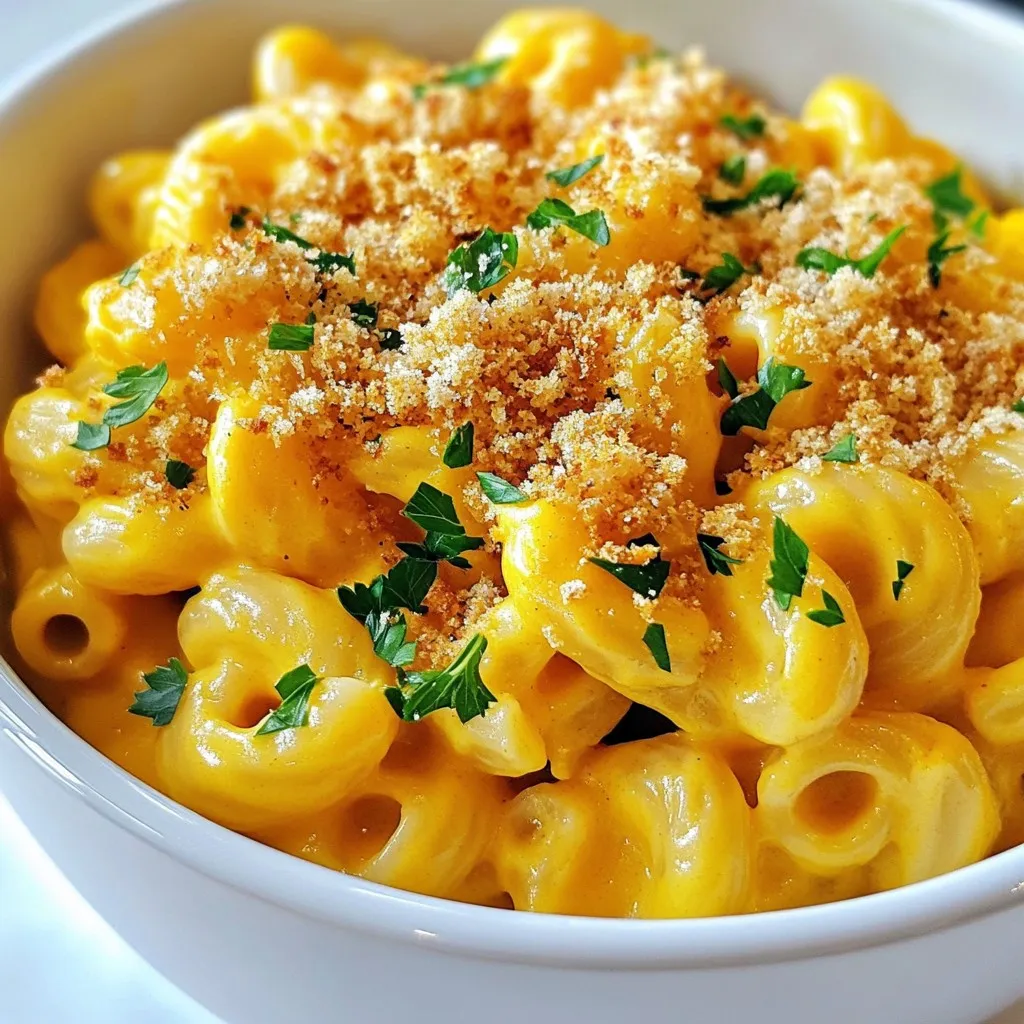
If you’re craving a cozy meal, butternut squash mac and cheese is the answer. This dish blends creamy cheese with the sweet, nutty flavor of butternut squash. I promise it’s comforting and easy to make. You’ll love how the squash adds nutrition without sacrificing taste. In this post, I’ll guide you through every step, from picking the best squash to baking that perfect cheesy goodness. Let’s dive in!
Why I Love This Recipe
- Comforting Flavors: This butternut squash mac and cheese combines the creamy richness of cheese with the subtle sweetness of squash, creating a comforting dish perfect for chilly autumn days.
- Nutrient Boost: By incorporating butternut squash, this recipe not only tastes delicious but also adds a healthy dose of vitamins and fiber, making it a more nutritious choice compared to traditional mac and cheese.
- Simple Preparation: This recipe is straightforward and quick to prepare, making it an ideal weeknight meal that anyone can whip up with minimal effort.
- Versatile Dish: Whether served as a main dish or a side, this mac and cheese adapts beautifully and can be customized with additional toppings or proteins to suit your taste.
Ingredients
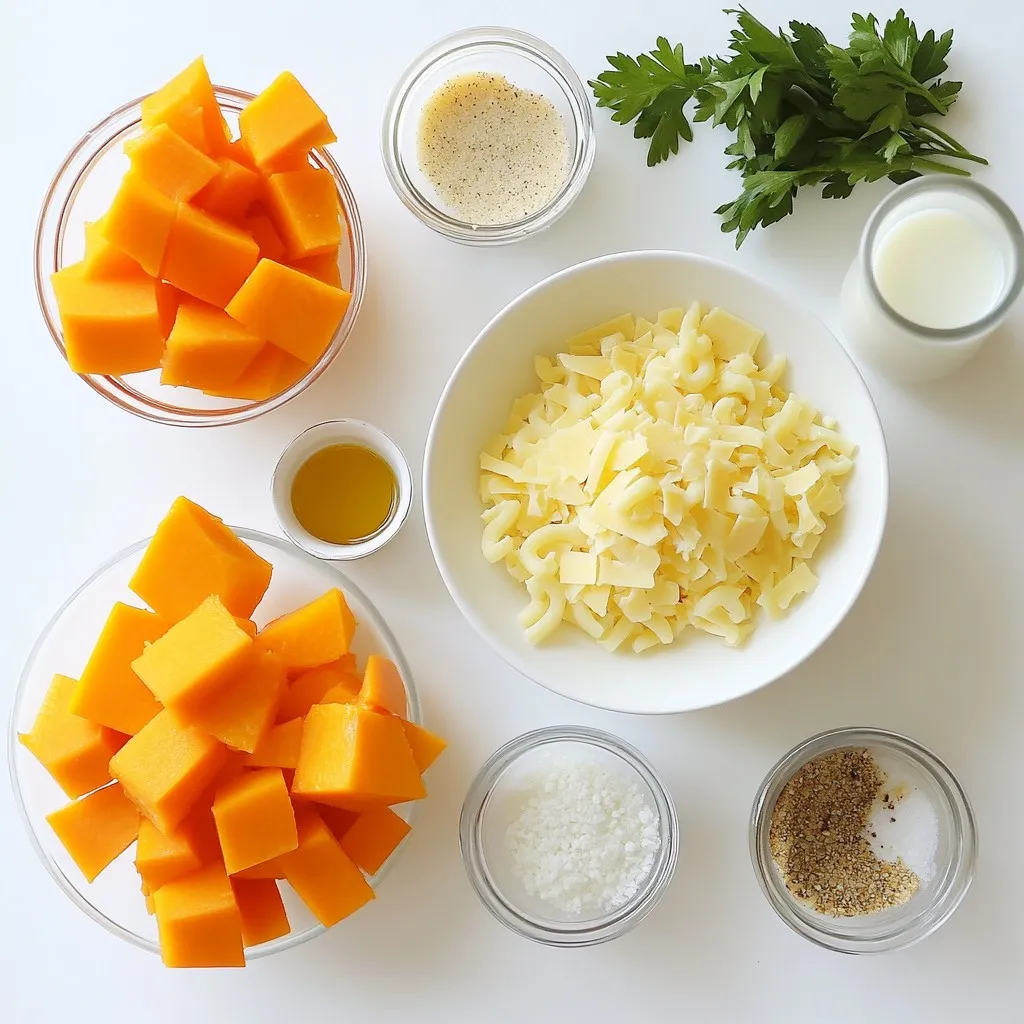
List of essential ingredients
– 2 cups elbow macaroni
– 2 cups butternut squash, peeled and cubed
– 1 tablespoon olive oil
– 1 small onion, finely chopped
– 2 cloves garlic, minced
– 2 cups sharp cheddar cheese, shredded
– 1 cup milk (whole or 2%)
– 1 teaspoon Dijon mustard
– ½ teaspoon ground nutmeg
– Salt and freshly ground black pepper, to taste
These ingredients come together to create a comforting dish. The butternut squash adds a sweet, nutty flavor that balances the sharpness of the cheddar.
Optional ingredients for variations
– ½ cup breadcrumbs (optional, for topping)
– Fresh parsley, chopped, for garnish
Breadcrumbs give a nice crunch. Fresh parsley adds color and fresh taste. You can also use different cheeses or spices to change the flavor.
Tips for selecting fresh butternut squash
When choosing butternut squash, look for these signs:
– A firm, smooth skin
– A rich, tan color
– No soft spots or blemishes
A good squash feels heavy for its size. This means it has more flesh inside. If you pick a fresh squash, it will taste better and blend smoothly in your dish.
Step-by-Step Instructions
Preheat your oven and prepare the pasta
Start by preheating your oven to 350°F (175°C). This step is key for even baking. While the oven warms up, fill a large pot with water. Add salt and bring it to a boil. Once boiling, add 2 cups of elbow macaroni. Cook it according to the package instructions until it’s firm but cooked. This should take about 8 to 10 minutes. Drain the macaroni and set it aside for later.
Cook and blend the butternut squash
Next, take the same pot and add 2 cups of cubed butternut squash to the boiling water. Let it cook for about 10 to 12 minutes. The squash should be soft enough to pierce with a fork. After cooking, drain the squash and transfer it to a blender or food processor. Blend until smooth and creamy. This will make the base for your cheese sauce.
Sauté onions and garlic effectively
In a skillet, heat 1 tablespoon of olive oil over medium heat. Once hot, add 1 small, finely chopped onion and 2 minced garlic cloves. Sauté these for about 5 minutes. You want the onion to become soft and clear. Stir it often to avoid burning. The sweet aroma will fill your kitchen and get you excited for the dish!
Combine ingredients and bake
In a large mixing bowl, combine the cooked macaroni, the smooth butternut squash, and 2 cups of shredded sharp cheddar cheese. Add 1 cup of milk, 1 teaspoon of Dijon mustard, and ½ teaspoon of ground nutmeg. Season with salt and freshly ground black pepper to taste. Mix everything well until the pasta is fully coated in the creamy sauce.
Now, transfer this mixture to a greased 9×13 inch baking dish. If you love a crunchy topping, sprinkle ½ cup of breadcrumbs over the top. Bake this in your preheated oven for 25 to 30 minutes. Keep an eye on it. You want the cheese to bubble and the breadcrumbs to turn golden brown. After baking, let it cool for a few minutes. Before serving, add a sprinkle of fresh chopped parsley for a pop of color.
Tips & Tricks
Cooking tips for perfect mac and cheese
To make great mac and cheese, start with the right pasta. Elbow macaroni works best, but feel free to use other shapes. Cook the pasta until it’s just al dente. This helps it hold up to the creamy sauce. Don’t forget to salt the water; it adds flavor to the pasta. Stir the pasta occasionally while it cooks to prevent sticking.
How to achieve a creamy texture
The key to a creamy butternut squash mac and cheese lies in the sauce. Blend the cooked butternut squash until it’s smooth. This will be your base. Add shredded sharp cheddar cheese for a rich flavor. Whole milk or 2% milk gives the sauce a nice body. Mixing in Dijon mustard and nutmeg adds depth, so don’t skip these! Stir everything together well to coat the pasta evenly.
Suggestions for preventing sogginess
To avoid sogginess, don’t overcook the pasta. Make sure to drain it well. Also, let the butternut squash cool slightly before blending. This keeps the sauce thick. If you use breadcrumbs, toast them lightly before adding. This will keep them crunchy on top. Lastly, allow the dish to rest for a few minutes after baking. This helps it set and stay firm when serving.
Pro Tips
- Choose the Right Cheese: Opt for sharp cheddar for a more pronounced flavor, but feel free to mix in other cheeses like Gruyère or mozzarella for added creaminess.
- Perfectly Cooked Pasta: Cook the elbow macaroni just until al dente to prevent it from becoming mushy during baking.
- Enhance the Flavor: Add a pinch of smoked paprika or cayenne pepper for a subtle kick that complements the sweetness of the butternut squash.
- Make Ahead: Prepare the mac and cheese ahead of time and refrigerate. Just add a few extra minutes to the baking time when you’re ready to serve.
Variations
Vegan alternative options
You can easily make butternut squash mac and cheese vegan. For the cheese, use a plant-based cheese that melts well. Nutritional yeast adds a cheesy flavor without dairy. Swap milk for almond or oat milk. Use vegetable broth instead of water for cooking the pasta. This keeps the dish creamy and rich while being completely dairy-free.
Gluten-free substitutes
If you need a gluten-free version, choose gluten-free elbow macaroni. Many brands offer great options that taste just like regular pasta. For the sauce, you can use gluten-free flour or cornstarch to thicken. Be sure to check labels on all ingredients to ensure they are gluten-free.
Creative add-ins (protein or vegetables)
You can boost nutrition and flavor with fun add-ins. Try adding cooked chicken, turkey, or even crispy bacon for protein. Spinach, kale, or peas are great for adding veggies. Roasted bell peppers or mushrooms can bring in more flavor and texture. Mix and match these options to create your perfect dish!
Storage Info
How to store leftovers properly
To keep your butternut squash mac and cheese fresh, let it cool first. Once cooled, place it in an airtight container. Make sure to seal it tightly. Store it in the fridge for up to three days. This helps keep the flavors intact while preventing spoilage.
Reheating practices for best results
When you’re ready to eat your leftovers, preheat your oven to 350°F (175°C). Place the mac and cheese in a baking dish. Cover it with aluminum foil to retain moisture. Heat for about 20 minutes, or until it’s warm throughout. This method helps keep the dish creamy and tasty.
If you’re in a rush, you can use the microwave. Place a portion in a microwave-safe bowl. Add a splash of milk for creaminess. Heat it in short bursts, stirring in between, until warm. This method is quick but may dry out the dish if overcooked.
Freezing guidance for long-term storage
To freeze butternut squash mac and cheese, portion it into freezer-safe containers. Make sure to leave some space at the top, as it will expand when frozen. Seal tightly to avoid freezer burn. You can freeze it for up to three months.
When you’re ready to enjoy it, thaw it overnight in the fridge. Reheat it in the oven or microwave, as mentioned earlier. This way, you can still enjoy that comforting, creamy dish even months later!
FAQs
What can I substitute for cheddar cheese?
You can use many different cheeses. Gruyère adds a nutty flavor. Monterey Jack melts well. For a stronger taste, try aged Gouda. You might also choose a mix of cheeses for more depth. Just keep in mind the flavor you want for your dish.
How do I make butternut squash mac and cheese ahead of time?
To prepare this dish ahead, make the sauce and cook the pasta. Combine them, then store in a covered dish. You can keep it in the fridge for up to two days. When ready to serve, bake it straight from the fridge. Just add a few extra minutes to the baking time.
Can I use other types of pasta?
Absolutely! You can try shells, penne, or even gluten-free pasta. Each type will change the texture slightly. Choose what you like best. Just make sure to cook it al dente, so it holds up well in the dish.
This blog post covered the essential steps to make a great butternut squash mac and cheese. You learned about key ingredients, how to cook and blend squash, and tips for a creamy texture. We also discussed variations for different diets and how to store leftovers properly.
Now, it’s time to try making this dish your own. Get creative with ingredients and enjoy the process. You’ll impress yourself and others with a delicious mea