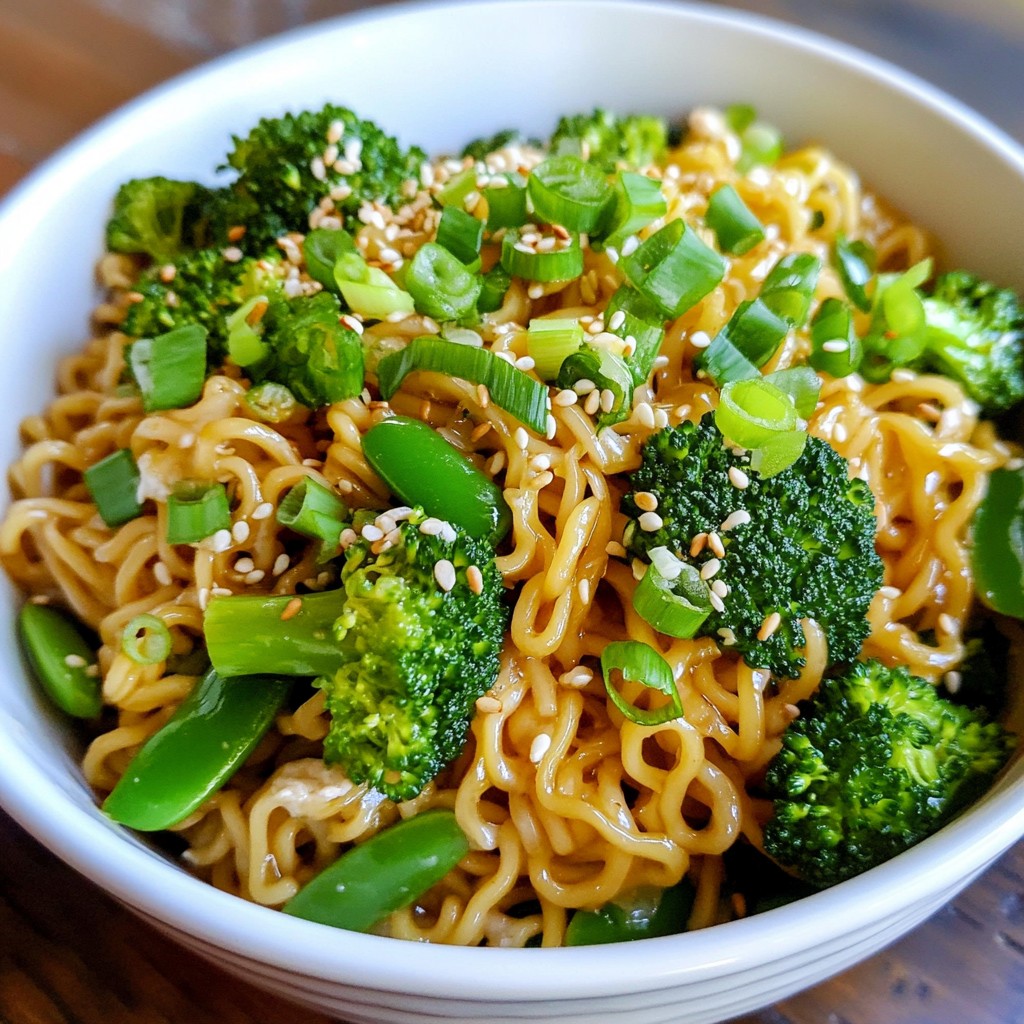
Welcome to your new favorite meal: Savory Sesame Garlic Ramen Noodles! This simple, flavorful dish combines tender ramen noodles with fresh veggies and a tasty garlic sauce. Whether you’re a busy student or a home chef, this recipe will satisfy your cravings in no time. Let’s dive into the ingredients and easy steps to create a bowl of deliciousness that you’ll want to make again and again!
Why I Love This Recipe
- Quick and Easy: This recipe can be prepared in just 20 minutes, making it perfect for a weeknight dinner.
- Flavorful and Healthy: The combination of fresh vegetables and aromatic flavors creates a delicious and nutritious meal.
- Customizable: You can easily adjust the vegetables and spice levels to suit your taste preferences.
- Vibrant Presentation: The colorful ingredients make this dish visually appealing, making it a great option for sharing.
Ingredients
Main Ingredients
- 2 packs of ramen noodles (discard the seasoning packets)
- 2 tablespoons sesame oil
- 4 cloves garlic, finely minced
- 1 tablespoon fresh ginger, grated
- 1 cup broccoli florets, bite-sized
- 1 cup snap peas, trimmed
- 1 large carrot, julienned
- 3 tablespoons soy sauce (or tamari for gluten-free)
- 1 tablespoon rice vinegar
- 1 tablespoon honey or maple syrup
- 1 teaspoon chili flakes (adjust according to your spice preference)
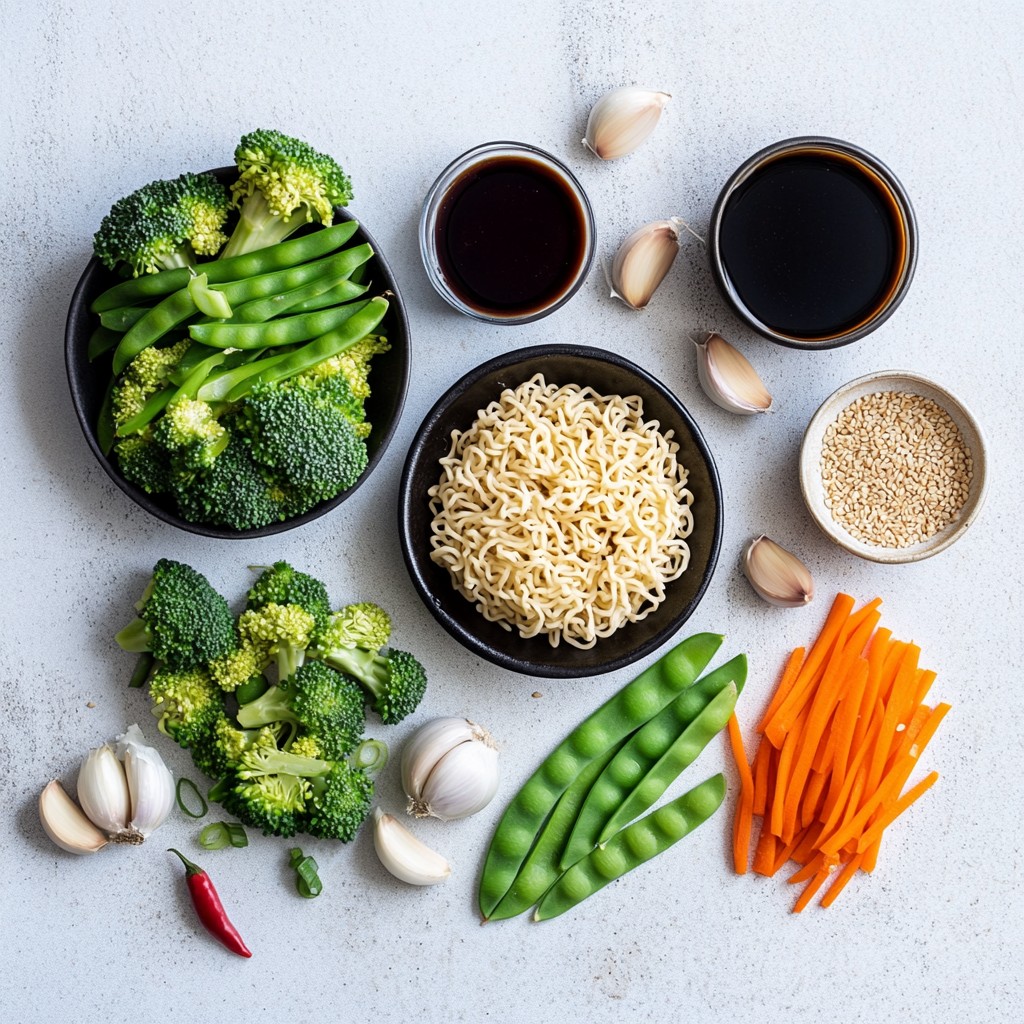
Ramen noodles are the star here. They give the dish its chewy texture. Discard the seasoning packets, as we will make our own flavors. Use fresh vegetables for the best taste. Broccoli, snap peas, and carrots add crunch and color. The garlic and ginger infuse warmth and spice.
Optional Garnishes
- 3 green onions, finely sliced
- Sesame seeds, for garnish
Green onions add a fresh bite. They also brighten the dish visually. Sesame seeds bring a nutty flavor and a nice crunch. You can sprinkle them on top just before serving. These garnishes make your plate look and taste amazing.
Step-by-Step Instructions
Preparing the Ramen Noodles
First, bring a large pot of water to a rolling boil. Add the ramen noodles. Cook them for about 3 to 4 minutes. Check the package for exact times. Once cooked, drain the noodles in a colander. Set them aside for later.
Sautéing the Aromatics
Next, grab a large skillet or wok. Heat 2 tablespoons of sesame oil over medium heat. Wait until the oil shimmers. Then, add 4 cloves of minced garlic and 1 tablespoon of grated ginger. Sauté these for about 2 minutes. Stir often until they smell fragrant and turn slightly golden.
Stir-Frying the Vegetables
Now, it's time to add your veggies. Toss in 1 cup of broccoli florets, 1 cup of snap peas, and 1 large carrot, julienned. Stir-fry these colorful vegetables for about 4 to 5 minutes. You want them tender but still crunchy and bright.
Combining the Flavors
While the veggies cook, make the sauce. In a small bowl, mix 3 tablespoons of soy sauce, 1 tablespoon of rice vinegar, 1 tablespoon of honey or maple syrup, and 1 teaspoon of chili flakes. Pour this sauce over the sautéed vegetables. Stir well to coat every piece in the tasty mix.
Adding the Noodles
Now, gently add the drained ramen noodles to the skillet. Toss everything together. Cook for another 2 to 3 minutes. This allows the noodles to heat through and soak up all the flavors.
Garnishing and Serving
Once everything is well combined, remove the skillet from heat. For a beautiful finish, sprinkle 3 finely sliced green onions and some sesame seeds on top. Serve the noodles in a large shallow bowl. Arrange them in a nest shape. Drizzle any extra sauce over the top. Enjoy this vibrant, tasty dish!
Tips & Tricks
Cooking Tips for Perfect Ramen
- Avoiding mushy noodles: To keep your noodles firm, cook them for exactly 3-4 minutes. Test one for doneness. Drain them right away to stop the cooking process.
- Flavor infusion: Use a mix of sesame oil and soy sauce for rich flavor. Sauté garlic and ginger first, then add your noodles. This helps them absorb the taste.
Ingredient Substitutions
- Gluten-free alternatives: If you need gluten-free ramen, look for rice noodles or use gluten-free soy sauce, like tamari.
- Vegetarian and vegan options: Swap honey for maple syrup to make it vegan. You can also add tofu or tempeh for protein.
Adjusting Spice Levels
- Managing chili flakes: Start with a small pinch of chili flakes. You can always add more later if you want extra heat.
- Adding more heat: For a spicier kick, drizzle some chili oil over the finished dish or add fresh sliced chili peppers.
Pro Tips
- Use Fresh Ingredients: Fresh vegetables not only enhance the flavor but also add vibrant color and nutrition to your dish.
- Customize Your Spice Level: Adjust the chili flakes to your taste. Start with a small amount and increase gradually for the perfect kick!
- Perfect Noodle Texture: Be careful not to overcook the ramen noodles; they should be al dente to maintain a pleasant chewiness.
- Add Protein: For a heartier meal, consider adding tofu, chicken, or shrimp to the stir-fry for extra protein and flavor.
Variations
Protein Additions
You can easily add protein to your sesame garlic ramen noodles. Great options include chicken, tofu, or shrimp.
- Chicken: Cook bite-sized pieces in the skillet before adding vegetables.
- Tofu: Use firm tofu. Cut it into cubes and sauté until golden.
- Shrimp: Add shrimp to the skillet and cook until they turn pink.
Cooking tips for proteins:
- Ensure your protein is cooked through.
- Season proteins with a bit of soy sauce for added flavor.
Different Vegetables
You can swap in different vegetables based on the seasons. This keeps your dish fresh and exciting.
- Broccoli: Use any other green vegetable like spinach or kale.
- Carrots: Try bell peppers or zucchini for a different crunch.
- Snap Peas: Substitute with sugar snap peas or green beans.
Popular additions:
- Mushrooms add a great umami flavor.
- Bell peppers bring sweetness and color.
Alternative Flavor Profiles
You can adjust the flavor of your ramen to suit your taste.
- Sweet and Spicy Adjustments: Add more honey for sweetness or extra chili flakes for heat.
- Regional Variations: Try miso paste for a richer flavor.
- For a Thai twist, add lime juice and fresh basil.
These variations let you create a dish that fits your cravings. Enjoy experimenting with flavors!
Storage Info
Storing Leftovers
After you enjoy your sesame garlic ramen noodles, store the leftovers right away. Place them in an airtight container. This keeps the noodles fresh and prevents them from drying out. You can store them in the fridge for up to three days. Make sure to cool them down first. Hot food can raise the fridge temperature.
Reheating Tips
When it's time to eat your leftovers, you have two good options: the microwave or the stove. If you use the microwave, place the noodles in a bowl. Add a splash of water to keep them moist. Heat for about one minute, then stir and heat for another 30 seconds if needed.
For the stove, heat a pan on medium-low. Add a bit of sesame oil and the noodles. Stir gently for about three minutes. This helps keep the noodles chewy and tasty.
Freezing the Dish
If you want to save your ramen for later, you can freeze it. Divide the noodles into portions. Place each portion in a freezer-safe bag or container. Remove as much air as you can. They will last for about one month in the freezer.
When you're ready to eat, take them out of the freezer. Let them thaw overnight in the fridge. To reheat, follow the stove method above. This makes sure your noodles stay delicious and fresh!
FAQs
How long does this dish last in the fridge?
This dish lasts about 3 to 4 days in the fridge. Make sure to store it in an airtight container.
Can I make this recipe ahead of time?
Yes, you can make this recipe ahead of time. Cook the noodles and vegetables, then store separately. This keeps the noodles from getting too soft.
Is this recipe suitable for meal prep?
Absolutely! You can batch cook this dish. Prepare larger portions and store in meal prep containers. Just reheat when you're ready to eat.
Can I use other noodle types?
Yes, you can use other noodle types. Consider soba or udon for a different taste. Rice noodles are another great choice for a gluten-free option.
What can I substitute for honey in this recipe?
If you need a substitute for honey, use maple syrup. Agave nectar is also a good choice for a vegan option.
This blog post detailed how to make delicious ramen. You learned about key ingredients, like noodles and fresh vegetables. I shared step-by-step cooking tips to perfect your dish. Remember to customize flavors and ingredients to suit your taste. You can also store or freeze leftovers for future meals. Enjoy your ramen journey, and don’t be afraid to try new variations! Cooking can be fun and creative!