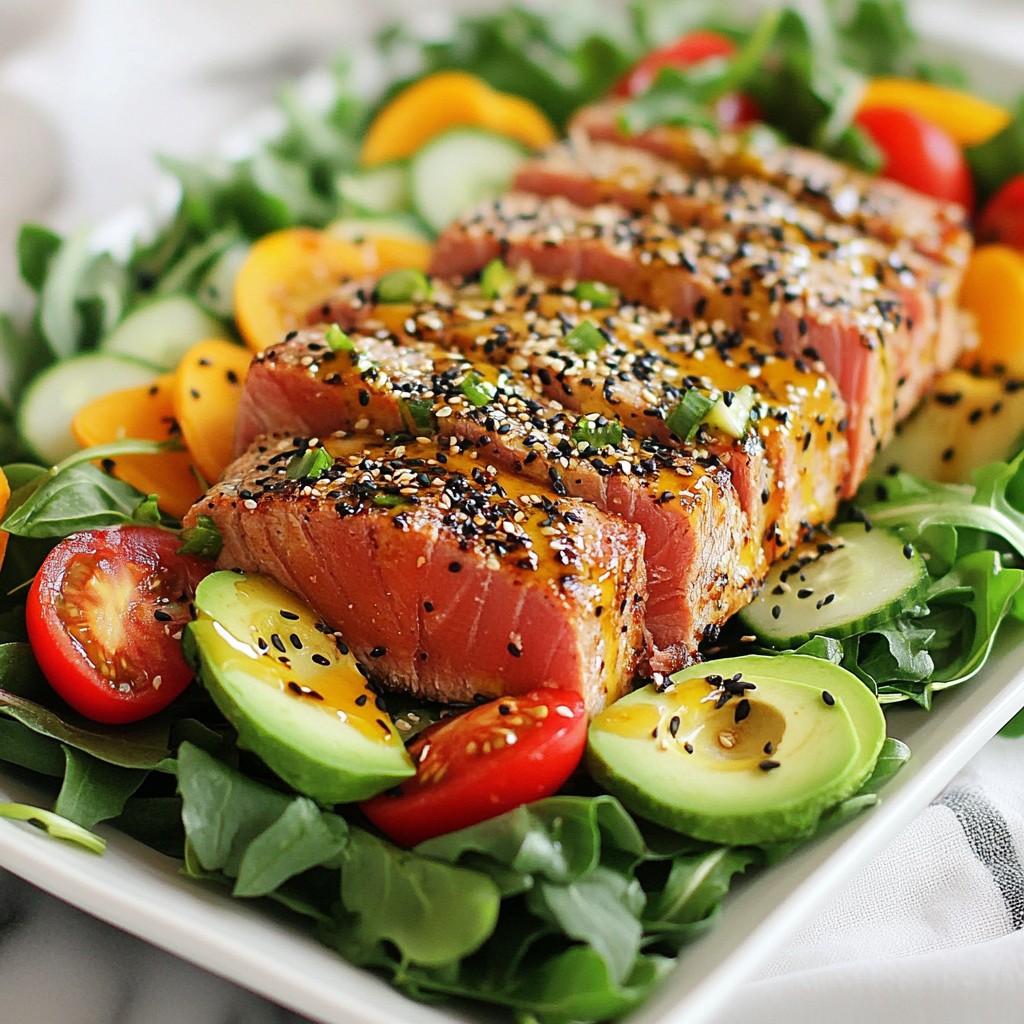
Are you ready to elevate your lunch with a fresh and simple dish? Sesame Crusted Ahi Tuna Salad is both tasty and satisfying. You’ll enjoy the crunch of sesame seeds paired with tender tuna and vibrant greens. In this post, I’ll share all the ingredients and easy steps to create this delicious meal. Let’s dive in and make your next salad unforgettable!
Why I Love This Recipe
- Unique Flavor Combo: The blend of sesame, soy sauce, and fresh vegetables creates a deliciously unique taste experience.
- Quick to Prepare: This salad comes together in just 20 minutes, perfect for a healthy weeknight meal.
- Beautiful Presentation: The vibrant colors of the mixed greens and the seared tuna make for an eye-catching dish.
- Healthy Ingredients: Packed with protein and healthy fats, this salad is a nutritious choice that doesn’t skimp on flavor.
Ingredients
Complete List of Ingredients
- Ahi Tuna Steaks
- Sesame Seeds
- Soy Sauce
- Sesame Oil
- Rice Vinegar
- Salad Greens Mix
- Avocado
- Cucumber
- Cherry Tomatoes
- Scallions
- Seasoning (Salt and Pepper)
- Optional Garnish (Pickled Ginger)
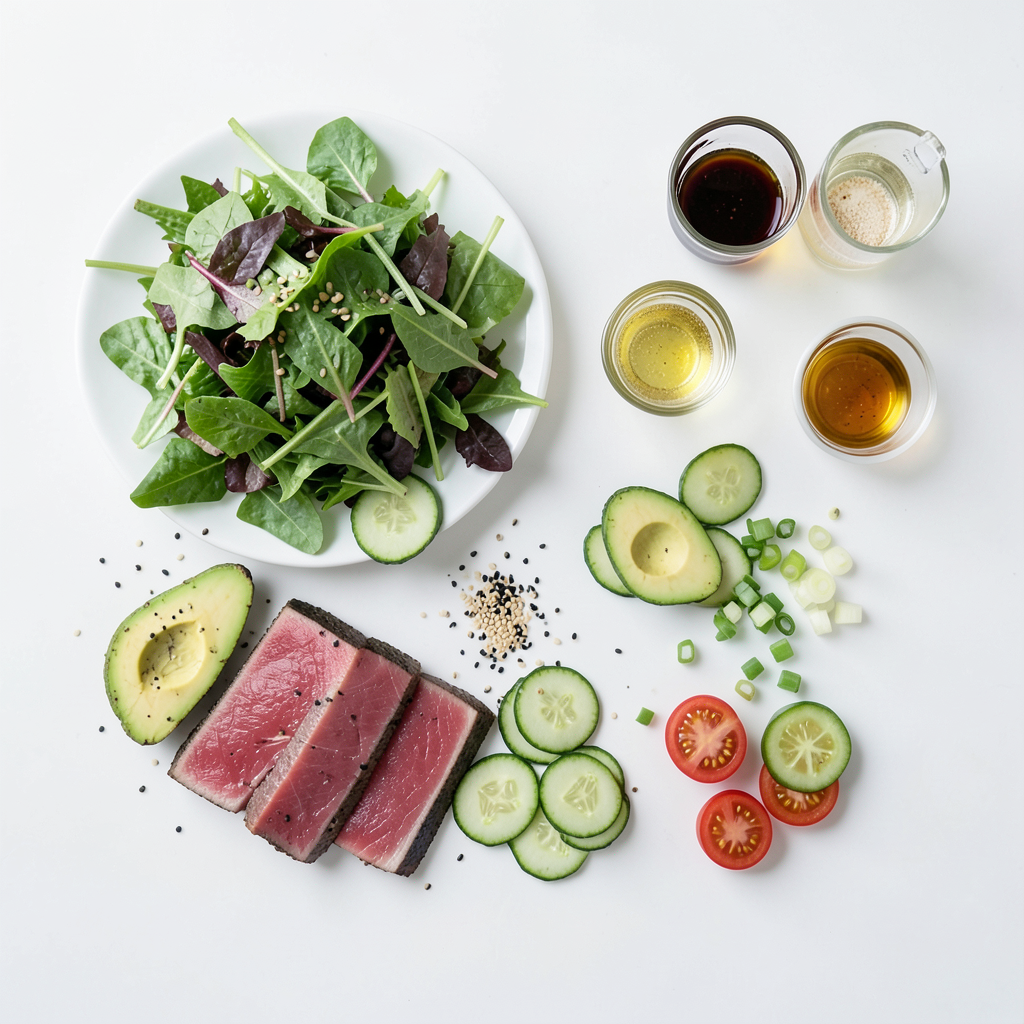
For my Sesame Crusted Ahi Tuna Salad, I use fresh ahi tuna steaks. Each steak should weigh around 6 oz. The sesame seeds add a great crunch and flavor. I like to mix black and white seeds for a nice look.
Next, I grab some soy sauce, sesame oil, and rice vinegar. These work together to make a simple and tasty dressing. A mix of salad greens gives the dish a fresh base. I often use arugula, baby spinach, and kale for variety.
I also add ripe avocado, thinly sliced cucumber, halved cherry tomatoes, and chopped scallions. These ingredients add color and taste to the salad. Don’t forget to season with salt and pepper to enhance all the flavors.
If you want an extra touch, try adding pickled ginger as a garnish. It gives a nice kick to the dish. This ingredient list is simple yet full of flavor. It makes the salad fresh and enjoyable.
Step-by-Step Instructions
Preparing the Ahi Tuna
First, take your fresh ahi tuna steaks. Use a paper towel to pat them dry. This helps get a nice sear. Season both sides with salt and pepper. This adds flavor to the fish.
Coating with Sesame Seeds
Next, pour the sesame seeds onto a flat plate. Press each tuna steak into the seeds. Make sure both sides are evenly coated. This will give your tuna a beautiful crunch.
Searing the Tuna
Heat a non-stick skillet over medium-high heat. Add a little sesame oil to the pan. Once hot, place the tuna steaks in the skillet. Sear for 1-2 minutes on each side. You want a rare to medium-rare finish. Adjust the time for your taste. After searing, remove the tuna from the pan and let it cool slightly.
Making the Dressing
In a small bowl, whisk together soy sauce, sesame oil, and rice vinegar. Mix until well combined. Set this dressing aside to let the flavors come together.
Assembling the Salad
In a large bowl, combine mixed salad greens, avocado slices, cucumber, cherry tomatoes, and scallions. Toss gently so you do not bruise the greens. This mix is fresh and colorful.
Slicing the Tuna
Once the tuna is cool, slice it thinly against the grain. Aim for about 1/2 inch thick slices. This helps with texture and makes it pretty on the plate.
Serving Suggestions
To serve, use a wide plate or large salad bowl. Add the mixed salad at the base. Then, arrange the sliced tuna on top. Drizzle the dressing over the salad and tuna. If you like, add pickled ginger as a garnish. This adds a nice zing to your dish.
Tips & Tricks
Perfecting the Tuna Sear
To cook the ahi tuna perfectly, start with dry steaks. Use a paper towel to remove moisture. This helps the tuna sear better. Season both sides with salt and pepper. Heat your skillet over medium-high heat. Add a splash of sesame oil to coat the bottom. When the skillet is hot, add the tuna. Sear each side for 1-2 minutes. For a rare finish, stop at 1 minute. Adjust the time based on your taste.
Dressing Tips
For a tasty dressing, whisk together soy sauce, sesame oil, and rice vinegar in a bowl. This mix adds a rich flavor. Let it sit for a few minutes. This allows the flavors to blend well. Drizzle it over the salad just before serving. If you want a kick, add a bit of fresh ginger for zest.
Presentation Ideas
Serve this salad on a wide, shallow platter. This helps show off the vibrant colors. Layer the mixed greens at the base. Arrange the sliced tuna on top. For an elegant touch, drizzle more dressing over the tuna. Add pickled ginger on the side for a pop of color and taste. Enjoy your beautiful dish!
Pro Tips
- Use Fresh Tuna: Always choose the freshest ahi tuna possible, as its quality significantly impacts the final dish. Look for bright red color and a clean, ocean-like scent.
- Don’t Overcook: Aim for a rare to medium-rare finish to preserve the tuna's tenderness and flavor. A quick sear on high heat will maintain a juicy center.
- Customize Your Greens: Feel free to mix your salad greens based on your preference. Adding different textures and flavors, like radicchio or frisée, can elevate the dish.
- Let the Dressing Sit: Allow the dressing to rest for a few minutes before using it. This helps the flavors meld together, resulting in a more delicious dressing.
Variations
Alternative Proteins
If you want a change from ahi tuna, consider using salmon or scallops. Salmon has a rich taste that pairs well with sesame. Scallops offer a sweet flavor and a tender bite. Just follow the same steps for searing. You’ll get a tasty dish every time.
Different Salad Combinations
You can mix up the salad greens. Try using romaine or mixed baby greens. Add in colorful veggies like bell peppers or radishes. You might also like to toss in nuts like almonds or walnuts for extra crunch. A fruit slice, like mango or mandarin, can give sweetness.
Substitutions for Ingredients
If you don't have sesame oil, olive oil works too. Rice vinegar can be swapped with apple cider vinegar for a tangy kick. Use cherry tomatoes or grape tomatoes based on what you find fresh. For the dressing, low-sodium soy sauce is a good choice if you want to cut back on salt.
Storage Info
Storing Leftovers
To store leftovers, first let the salad cool. Place the leftover salad in an airtight container. Keep the tuna and salad separate to avoid sogginess. Store in the fridge for up to two days. If you want to keep the tuna fresh, wrap it tightly in plastic wrap or foil before placing it in the container.
Reheating Tips
Reheating tuna can be tricky. I recommend not reheating it, as it can become dry. If you must, use low heat on the stove. Avoid the microwave, as it may cook the tuna too much. Heat it just until warm, not hot. This keeps the texture nice and tender.
Best Practices for Salad Ingredients
When storing salad ingredients, keep them dry. Moisture can make greens wilt. Use a paper towel in the container to absorb extra moisture. Keep sliced avocado in a separate container to prevent browning. For cucumbers and tomatoes, store them uncut until you are ready to eat. This keeps them fresh and crunchy.
FAQs
What is the best way to cook ahi tuna?
The best way to cook ahi tuna is by searing it. Searing gives a nice crust while keeping the inside tender. Use a hot skillet and a little oil. Cook for 1-2 minutes on each side. Adjust the time for your desired doneness. I love a rare finish, which keeps the fish juicy.
How can I make this recipe gluten-free?
To make this recipe gluten-free, simply swap soy sauce for tamari. Tamari is a great gluten-free option that tastes similar. Always check labels to ensure no hidden gluten is present. This small change lets you enjoy the same bold flavors without worry.
Can I use frozen tuna for this recipe?
Yes, you can use frozen tuna. Just make sure to thaw it first in the fridge. After thawing, pat it dry with a paper towel. This helps achieve a good sear. Keep in mind that fresh tuna has a better texture and flavor.
What are the health benefits of ahi tuna?
Ahi tuna is packed with nutrients. It is high in protein and low in calories. This fish is also rich in omega-3 fatty acids, which are good for heart health. Plus, it's a great source of vitamins and minerals like selenium and vitamin B12. Eating ahi tuna can support overall health and well-being.
This blog post covered the great flavors of an Ahi Tuna Salad. We explored ingredients, step-by-step instructions, tips, variations, and storage advice. You can make a fresh, tasty meal that fits your needs. Remember, searing tuna well and using fresh ingredients heightens flavor. Feel free to try different proteins or dressings. Use what you learn to enjoy a healthy dish every time. Now, gather your ingredients and start cooking!